
(Article #2 in the series “Running on Empty: Rethinking Learner Support in Economically Uncertain Times”)
Practical strategies for sustainable learner and workforce support
In the first article in this series, we explored how a global crisis unfolding thousands of kilometres away is quietly reshaping daily life in South Africa.
What begins as geopolitical tension eventually arrives far closer to home. In rising fuel prices. Increased transport costs. Higher food prices. Financial anxiety and growing emotional fatigue among individuals already living under immense pressure.
We spoke about learners on modest stipends, interns entering the workforce for the first time and junior employees earning minimum wage while trying to support entire households. We acknowledged the emotional burden carried not only by individuals with visible disabilities but also by those navigating invisible struggles that often go unnoticed in the workplace.
But once awareness exists, what comes next?
How do organisations respond when they too are under pressure?
This is perhaps where the conversation becomes most important because the reality is this. Many businesses are not operating from a place of abundance themselves. Organisations across South Africa are balancing rising operational costs, economic uncertainty and increasing pressure to do more with less.
So should companies simply absorb more financial responsibility?
Not necessarily.
Perhaps the more valuable question is this.
How can organisations use existing systems, resources and workplace structures more strategically to create meaningful support without placing unsustainable pressure on the business itself?
Because support does not always begin with larger budgets.
Sometimes it begins with rethinking how we work.
Take hybrid learning and flexible working arrangements for example.
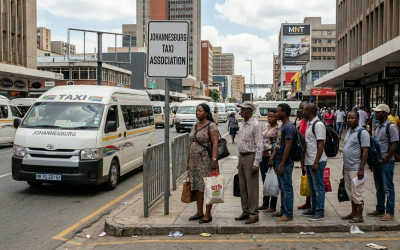
For many learners, interns and junior employees, transport has become one of the largest monthly expenses attached to simply arriving at work or training. In some cases, individuals are travelling several hours a day while spending a substantial portion of their income just getting to and from the workplace.
So what if organisations introduced a structured work from home or study from home day once every two weeks or even once a month where operationally possible?
At first glance, it may appear to be a small adjustment.
But for someone living month to month, even a slight reduction in transport costs can create breathing room financially. It may also reduce emotional exhaustion, improve concentration and allow learners time to complete assignments or administrative responsibilities without needing to take additional leave or sacrifice work performance.
And perhaps there is another benefit.
What if flexibility itself improves retention, productivity and learner engagement?
The Covid-19 pandemic proved that many organisations are capable of operating differently when necessary. Digital collaboration platforms such as Microsoft Teams, shared document systems, instant messaging functions and virtual meetings have already become integrated into many workplaces.
So perhaps the question is no longer whether flexibility is possible.
Perhaps the question is where flexibility can be implemented responsibly and sustainably to support both the organisation and the individual.
There is also a broader strategic consideration that organisations may need to begin exploring more intentionally.
If additional support mechanisms are introduced for learners, interns or graduates, could some of these interventions align with broader skills development strategies and contribute towards B-BBEE objectives?
For example, where organisations are already investing significantly into learnerships, internships and graduate programmes, could targeted support structures improve both programme sustainability and long term transformation outcomes?
Could stronger retention rates improve overall skills development impact?
Could additional learner support ultimately strengthen programme success rather than simply increase cost?
These are important strategic conversations because replacing learners who withdraw due to financial or emotional pressure also carries a cost. Recruitment costs. Retraining costs. Operational disruption. Reduced programme continuity.
Sometimes prevention is more sustainable than replacement.
There is perhaps another important perspective organisations may need to consider more intentionally.
When conversations around reasonable accommodation take place, they are often viewed exclusively through the lens of disability.
But at its core, reasonable accommodation was introduced as an affirmative measure intended to reduce barriers and create more equitable access to opportunity particularly for individuals who have historically experienced exclusion or disadvantage.
And perhaps that is what makes the current moment so important.
Because many of the challenges now affecting learners, interns, graduates and lower income employees are not simply individual struggles. They are structural realities linked to inequality, economic vulnerability and unequal access to resources.
So what happens when transport costs begin limiting a learner’s ability to participate consistently in a programme?
What happens when financial pressure affects concentration, wellbeing and performance?
What happens when individuals are technically employed but still operating in survival mode due to circumstances beyond their control?
Perhaps support interventions such as hybrid learning arrangements, flexible study days, access to wellness support, mentorship structures or even collaborative transport initiatives should not only be viewed as acts of compassion.
Perhaps they should also be viewed as practical affirmative measures that help create fairer and more sustainable participation within the workplace.
Not every accommodation requires significant financial investment.
Sometimes accommodation is flexibility.
Sometimes it is awareness.
Sometimes it is allowing people access to systems, tools and ways of working that better support their ability to cope, contribute and succeed.
And perhaps that is the larger shift organisations are now being called to make.
Moving away from viewing accommodation only as a legal obligation and towards understanding it as part of building genuinely inclusive and sustainable workplaces.
Because inclusion is not only about opening the door.
It is also about asking whether people are realistically supported enough to remain in the room once they have entered it.
Mental health support is another area where organisations may need to think differently.
Why?
Because financial hardship rarely exists in isolation.
It affects concentration, emotional resilience, sleep, confidence and overall wellbeing. Over time, chronic stress begins affecting workplace performance, relationships and mental health in ways that are not always immediately visible.
And yet many individuals continue suffering silently because they fear being judged, misunderstood or perceived as incapable.
So what practical support structures could organisations realistically introduce?
Perhaps it begins with ensuring learners and lower income employees have access to existing employee wellness programmes where possible.
Perhaps learner support officers or mentors could be trained to identify early warning signs of distress before situations escalate into crisis.
Perhaps managers need to become more conscious of sudden behavioural changes. Withdrawal. Increased absenteeism. Emotional fatigue. Declining performance. Loss of motivation.
Not from a disciplinary perspective.
But from a human one.
Because sometimes the most important intervention is recognising when somebody is no longer coping well.
Support groups may also offer meaningful value in ways organisations have not fully considered before.
What if internal learner groups or digital chat platforms became spaces where individuals could share practical support and resources with one another?
Carpool initiatives. Affordable accommodation opportunities closer to the workplace. Shared study support. Advice around budgeting, transport or access to services.
Often people facing similar challenges already hold valuable knowledge that could help others navigating the same pressures.
They simply need safe spaces to connect.
And perhaps this is ultimately the larger shift organisations are now being called to make.
Moving beyond viewing support only through the lens of compliance and beginning to see it through the lens of sustainability, retention and human wellbeing.
Because the future workforce is already telling us something important.
People are exhausted.
Not because they lack ambition.
Not because they lack resilience.
But because surviving has become increasingly expensive emotionally, mentally and financially.
The organisations that respond thoughtfully during this period may ultimately build stronger cultures, stronger retention and stronger long term outcomes not because they spent the most money but because they chose to think differently about support.
Because perhaps meaningful support is not always about doing more.
Sometimes it is about understanding more.
And once organisations truly understand what people are carrying silently each day, it becomes very difficult not to ask one final question.
If flexibility, awareness and small structural changes could meaningfully improve somebody’s ability to cope, learn and succeed, can we really afford not to consider them?